Artwork can be damaged long before it reaches its intended place. A frame gets bumped on a stair turn. A canvas shifts in a car. A blade slips while someone is opening a box.
The good news: careful handling is mostly about slowing down, planning the route and giving each piece the support it needs. Whether you’re moving art between rooms, preparing for a delivery or coordinating a larger project, these practical steps can help protect it up to the point installation begins.
Why damage often happens before hanging
Frames and artwork are especially vulnerable while they’re being carried, loaded, unpacked or temporarily stored. These moments can involve tight spaces, busy schedules and multiple people handling the same piece. A small impact or an unsecured load may be enough to damage a corner, glazing or delicate surface.
In Florida, a hot car or humid garage can add another concern. Heat and changes in humidity may affect frames and adhesives, so where you keep a piece, and for how long, matters.
A calmer move starts before anyone lifts the art. Check the route, clear obstacles and decide where each piece will go next.
Moving artwork inside a home or building
Plan the path before you lift. Measure tight doorways, hallways and stair turns. Move small obstacles out of the way, open doors fully and identify a safe place to set the artwork down if you need to pause. Don’t discover a narrow turn while carrying a large frame.
Carry framed pieces upright. Hold the frame by its sides and lower edges, supporting it securely. Don’t carry it by the top rail or hanging wire; those aren’t handles. Keep the piece steady and close to your body, and avoid gripping or pressing on the artwork itself.
Use two people for anything wide, awkward or heavy. Agree on the route and who is leading before you start. Move slowly around thresholds and stair turns, where corners can catch walls or railings.
Pad vulnerable corners before moving, especially on ornate or delicate frames. Never slide a piece across the floor, drag it by an edge or rest its weight on one corner. If you need a brief stop, choose a stable, protected spot where the piece won’t be bumped.
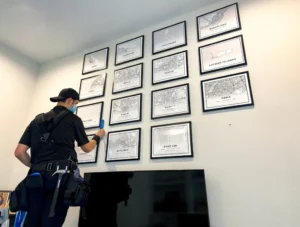
For a group of works, decide which piece goes where before moving them. If you’re arranging a gallery wall, Firehawk’s gallery wall design guide can help you plan the overall layout before the art is ready to go up.
Transporting art safely
For a local trip, framed artwork generally travels upright on edge, not lying flat. Secure it so it can’t slide, tip or bounce around during the drive. Use clean, soft padding between pieces, and make sure straps or other restraints don’t press on the artwork or frame.
Keep the artwork’s face clear. Don’t stack boxes, furniture or other objects against it, and don’t place one piece directly against another without protective padding between them. A load that looks stable while parked can shift when the vehicle turns or stops.
Avoid leaving artwork in a parked car, especially in Florida’s heat. A hot vehicle can expose frames, adhesives and other materials to uncomfortable temperature and humidity changes. If you’re making several stops, bring the art inside rather than leaving it in the car.
For longer trips or sensitive pieces, ask an experienced art handler or conservator about suitable packing and environmental conditions. The Canadian Conservation Institute offers practical guidance on handling paintings and preparing them for travel.
Unpacking and preparing artwork
Choose a clean, flat, stable surface with enough room to set the piece down safely. Keep tools and drinks away from the work. If the package is large or difficult to manage, ask someone to help steady it.
When opening wrapping, cut tape or material with the blade angled away from the artwork’s surface. Work gradually; don’t push a blade deep into a package where it could reach the frame, glazing or canvas. Once the outer wrapping is open, remove it carefully rather than pulling it across the face of the piece.
Before the work is moved again, inspect the frame, glazing and backing. Look for fresh cracks, loose joints, shifted backing or signs that the artwork itself may have been affected. If anything appears unstable or damaged, pause and get advice before handling it further.
If the piece already has D-rings, wire or other hanging hardware, check that the existing parts are tight and sound. This is a condition check, not a reason to lift the artwork by its wire. Add felt bumpers to the lower back corners to help protect the wall when the piece is eventually placed.

Large, complex pieces benefit from a clear route, coordinated handling and a safe place to wait before their next step.
Short-term storage done right
If artwork can’t go directly to its destination, store it in a clean, dry, climate-controlled interior space. A garage, attic or damp storage area may seem convenient, but temperature swings, moisture and direct sunlight can put artwork and frames at risk.
Keep pieces upright and supported on padded surfaces or a suitable rack, with the artwork off the floor. Leave enough space around them to avoid accidental bumps. Don’t lean an unsecured piece against a wall, and avoid leaning several works together in a stack. The pieces can slip, and frames or surfaces may press against one another.
Keep artwork away from windows, direct sun, leaks and sources of heat or humidity. If the room feels hot, damp or unstable to you, it may not be a suitable temporary home for a valuable or sensitive piece.
Unpacking a collection or commercial delivery?
When several pieces are arriving for a home, office or commercial space, label each one with its destination and keep the sequence clear. Grouping, protecting and tracking the work can make handoffs easier, especially if multiple people are involved. For a residential project, you can also review Firehawk’s residential art installation service to understand what to have ready before the installation visit.

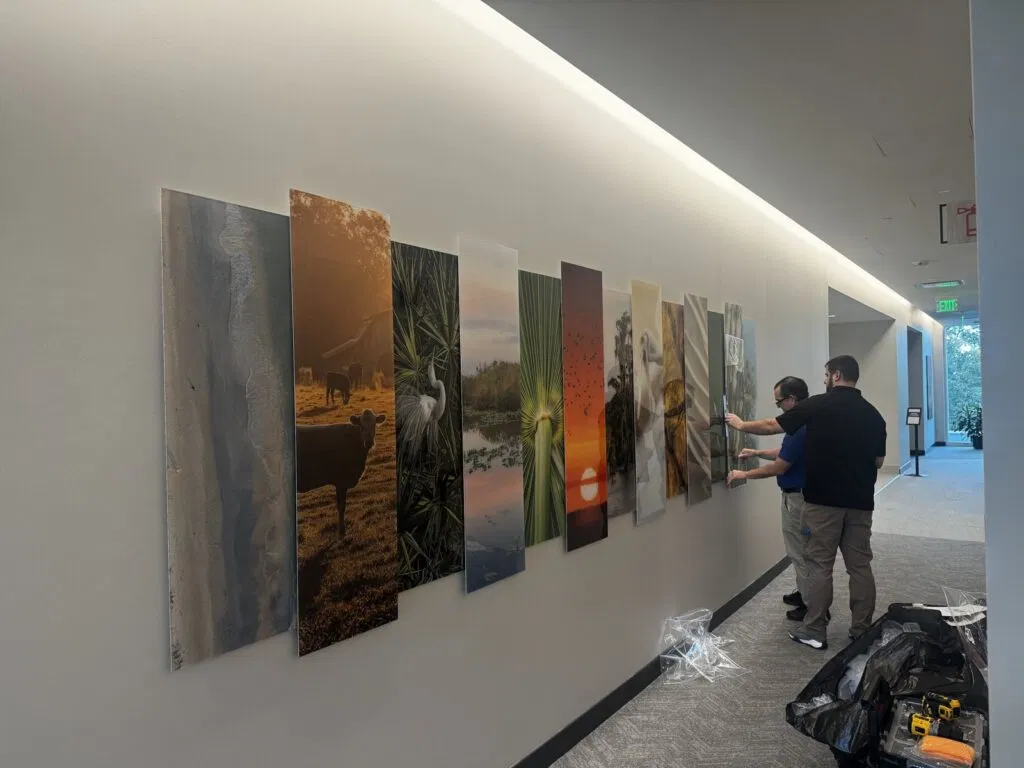
For a multi-piece project, keeping items organized helps the team match each piece to its intended location.
When to hand it to the pros
Consider using an experienced art handler for oversized or very heavy pieces, artwork with glass or delicate surfaces, and unframed canvas. The same goes for irreplaceable or high-value works, tight stairwells and doorways, or any piece you can’t comfortably carry with control.
Professional coordination can also help with commercial rollouts, where many pieces need to arrive, be tracked and go up in sequence. If the artwork appears unstable or already damaged, consult a qualified conservator or art professional before moving it further.
A practical art-handling checklist
Before you move or store a piece, check:
- Route: Have you measured doorways, hallways and stair turns and cleared the path?
- People: Do you have a second person for wide, heavy or awkward pieces?
- Grip: Can you carry the frame upright by its sides and lower edges, without using the wire?
- Protection: Are the corners padded, and is the face clear of pressure or contact?
- Transport: Is the piece upright, cushioned and secured so it can’t shift?
- Climate: Will it stay out of a hot car, direct sun and damp storage?
- Condition: Have you checked the frame, glazing, backing and existing hardware before rehanging?
One crew from transport through installation
Firehawk Art Installers can handle transport, placement and installation with one insured crew, so you don’t have to coordinate separate movers and handymen. The team has completed 2,700+ installations, brings 10+ years of experience and holds a 5.0-star rating across 100+ Google reviews. Museum-grade hardware is available for pieces up to 250+ lbs. Firehawk carries general liability, workers’ compensation and auto insurance, with certificates of insurance available on request.
To talk through your project, call (407) 573-7775 or contact Firehawk.